
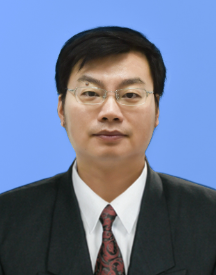
Prof. Liang Zhou
IEEE Fellow/IET Fellow/BCS Fellow/AAIA Fellow
Vice President
Nanjing University of Posts and Telecommunications, China
Biography: ZHOU Liang is a professor and vice president at Nanjing University of Posts and Telecommunications. He earned his Bachelor's and Master's degrees from Nanjing University of Posts and Telecommunications in 2003 and 2006, respectively, and obtained his Ph.D. from Paris-Saclay University, France, and Shanghai Jiao Tong University, China, in 2009. Following this, he conducted postdoctoral research at ParisTech in France and the MIT in the USA. From 2010 to 2011, as a Humboldt Scholar, he carried out research at the Technical University of Munich in Germany. He has been honored with titles such as Distinguished Professor by the Ministry of Education (2020), National Excellent Young Scientist Fund (2013), Humboldt Research Award (2025); His research primarily focuses on multimedia communications and intelligent communications. In recent years, he has published numerous academic papers in journals like Nature Communications, IEEE JSAC. He has led key projects funded by the National Natural Science Foundation of China, as well as industry-academia collaboration projects with companies like Huawei and ZTE. Currently, he serves as the Chair of the Multimedia Communications Technical Committee of the IEEE Communications Society, Director of the Professional Committee of the China Institute of Communications, and is an editorial board member for academic journals such as IEEE Transactions on Communications, IEEE Transactions on Vehicular Technology, IEEE Transactions on Cognitive Communications and Networking, IEEE Internet of Things Journal, and IEEE Wireless Communications. He is an IEEE Fellow/IET Fellow/BCS Fellow/AAIA Fellow.
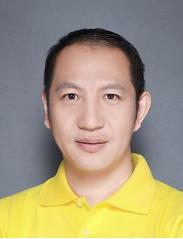
Prof. Linlin Shen
Vice Dean and PengCheng Scholar Distinguished Professor, School of Artificial Intelligence
Shenzhen University, China
Biography:Bio: Professor Linlin Shen received Ph.D. degree from the University of Nottingham, Nottingham, UK. Prof. Shen is currently the “Pengcheng Scholar” Distinguished Professor at School of Computer Science and Software Engineering, Shenzhen University, Shenzhen, China. He is also an Honorary professor at School of Computer Science, University of Nottingham, UK and Visiting Professor at School of Computer Science, University of Nottingham, Ningbo, China. He serves as the director of Computer Vision Institute, AI Research Center for Medical Image Analysis and Diagnosis and China-UK joint research lab for visual information processing. He also serves as the Co-Editor-in-Chief of the IET journal of Cognitive Computation and Systems. He is listed as the “Most Cited Chinese Researchers” by Elsevier, and listed in a ranking of the “Top 2% Scientists in the World” by Stanford University. He received the Most Cited Paper Award from the journal of Image and Vision Computing. His cell classification algorithms were the winners of the International Contest on Pattern Recognition Techniques for Indirect Immunofluorescence Images held by ICIP 2013 and ICPR 2016.
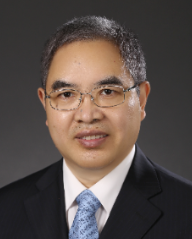
Prof. Pingyi Fan
IET Fellow, NAAI Member
Tsinghua University, China
Biography: Professor Fan is a tenured professor at the Department of Electronic Engineering of Tsinghua University and the director of the Open-Source Data Recognition Innovation Center. He is a member of the US National Academy of Artificial Intelligence (US-NAAI), co-chair of the academic committee of the NAAI Asia Research Institute, one of the first cohort members of the NAAI Global Governance and AI Safety Committee, and a fellow of the Institution of Engineering and Technology (IET). He obtained his Ph.D. from the Department of Electronic Engineering, Tsinghua University in 1994. From 1997 to 1999, he was a visiting scholar at the Hong Kong University of Science and Technology and the University of Delaware in the United States. He has also visited many universities and research institutes in the United States, Europe, Japan, Hong Kong, and Singapore on multiple occasions. His recent main research directions include 6G wireless communication networks and machine learning, semantic information theory and generalized information theory, big data processing theory, and intelligent network and system detection.
He has presided over national 973 and 863 projects, mobile special projects, key R & D plans, national natural science funds, and international cooperation projects and subjects. He has published more than 600 academic papers (ORCID). Among them, there are 260 International Journal papers (189 papers in IEEE Journals ) and 210 IEEE conference papers, where more than 10 are ESI highly cited papers. He has applied for more than 40 national patents and 7 international patents, and has written 5 academic works. As co-author, he has received 17 best paper awards, including IEEE ICCCS 2024, ICCCS 2023, ICC 2020, and Globecom 2014, the IEEE TAOS 2020 best paper award of the year, the 2024 high impact paper award of the Chinese Journal of Electronics (CJE), the IEEE TWC (2009) outstanding journal editorial board award. He also received the AEIC (2023) Most Popular Scholar Award, the 2023 Natural Science Second Prize from the China Communications Society, the DCASE2024 Challenge Judges' Award, the NAAI 2025 AI Exploration Award, and the NAAI Outstanding Scientist Award.
He serves as an editorial board member for several journals, including IEEE and MDPI, such as IEEE Transactions on Cognitive Communications and Networking (TCCN) (2024-2026), the editorial board member of the Open Journal of Mathematical Sciences, and the editorial board member of IAES International Journal of Artificial Intelligence (IJAI) (2023-2026). He is also the vice chairman of the Information Theory Branch of the Chinese Institute of Electronics, the co-chair of the China 6G-ANA TG4, and the chairman of the IEEE ChinaSIP Network and Communication Technology Committee. He has served as the conference chair, technical committee chair, or delivered keynote speeches at international conferences more than 40 times.
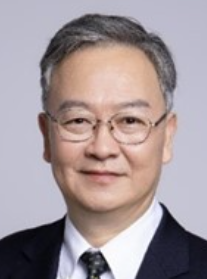
Prof. Mo-Yuen Chow
IEEE Fellow
Shanghai Jiao Tong University, China
Biography: Mo-Yuen Chow earned his degree in Electrical and Computer Engineering from the University of Wisconsin-Madison (B.S., 1982); and Cornell University (M. Eng., 1983; Ph.D., 1987). Dr. Chow has been a Professor at Shanghai Jiao Tong University since 2022. He is an Emeritus Professor in the Department of Electrical and Computer Engineering at North Carolina State University.
Dr. Chow's recent research focuses on distributed control and management, smart micro-grids, batteries management, and mechatronics systems. Dr. Chow has established the Advanced Diagnosis, Automation, and Control Laboratory. He is an IEEE Fellow, the Co-Editor-in-Chief of IEEE Trans. on Industrial Informatics 2014-2018, Editor-in-Chief of IEEE Transactions on Industrial Electronics 2010-2012. He has received the IEEE Region-3 Joseph M. Biedenbach Outstanding Engineering Educator Award, the IEEE ENCS Outstanding Engineering Educator Award, the IEEE ENCS Service Award, the IEEE Industrial Electronics Society Anthony J Hornfeck Service Award, and the IEEE Industrial Electronics Society Dr.-Ing. Eugene Mittelmann Achievement Award. He is a Distinguished Lecturer of IEEE Industrial Electronics Society.
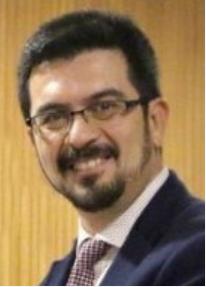
Prof. Ismail Rakip Karas
Karabuk University, Turkey
Biography: Ismail Rakip Karas is a Professor of Computer Engineering Department and Head of 3D-GeoInformatics Research Group at Karabuk University, Türkiye. He received his BSc degree from Konya Technical University, MSc degree from Gebze Technical University, and PhD degree from GIS and Remote Sensing program of Yildiz Technical University, in 1997, 2001 and 2007 respectively. In 2002, he involved in a GIS project at Forest Engineering Department, Oregon State University, USA. During the various periods of 2010, 2011, and 2014, he was a Visiting Researcher in 3D GIS Research Lab, Faculty of Geoinformation Science and Engineering, Universiti Teknologi Malaysia. Between 2000-2009, he was a Research Assistant at Geographic Information Systems Lab of Gebze Technical University. Since 2009, he has been in Karabuk University and taught undergraduate and graduate classes in Geoinformation and Computer Sciences.
Prof Dr Ismail Rakip Karas was the Member of Executive Committee in CAYDAG-TUBITAK (The Scientific and Technological Research Council of Türkiye) between 2017 and 2019. He has also carried out administrative duties such as Head of Computer Science Division of the Department, Director of Safranbolu Vocational School, Dean of Safranbolu Fine Art and Design Faculty, and acting Dean of Faculty of Architecture in the Karabük University. Currently, he is the Deputy Rector in the same university. As a keynote speaker, Prof Karas has been invited to the different high level conferences. He is the author of more than two hundreds international and Turkish publications and papers on various areas of Geoinformation Science. He has organized and chaired some important conferences and workshops such as Smart Cities Applications Conf, Geo-Advances 2017. He is in the editorial board of "International Journal of Geo-Spatial Knowledge and Intelligence", "American Journal of Geographic Information System", JesTech, and some others. He has involved in Tubitak, EU, and other national and international projects and got various awards and supports during his research activities. For more information please visit; https://www.ismailkaras.com